

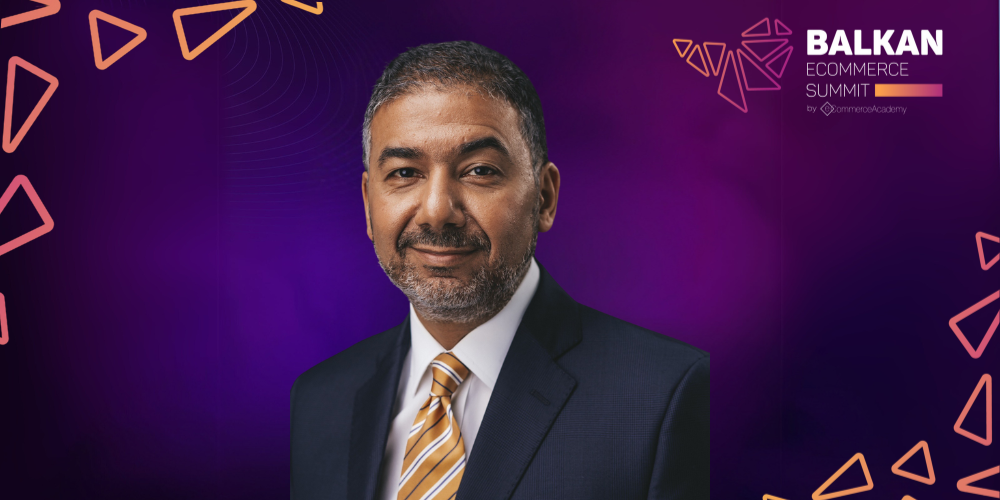
 Ahmed Hassan is a seasoned business leader, advisor, and coach with over 30 years of experience in FMCG, pet nutrition, and the field of eCommerce. As a former General Manager of Colgate-Palmolive in Russia, he played a key role in revitalizing struggling markets and driving growth. With a strong background in North Africa, Russia, and the Middle East, he has helped businesses transform and succeed by combining strategic insight with effective leadership.
At the Balkan eCommerce Summit 2025, Ahmed will address one of the biggest challenges facing retailers today – the transition from brick-and-mortar to eCommerce. He will share real-world strategies for navigating this shift, helping businesses innovate, adapt, and stay competitive in the digital age.
In this interview, he discusses key lessons from high-stakes turnarounds, the importance of asking the right questions, and why a clear mission is essential for eCommerce success. From leadership resilience to digital transformation, his insights serve as a practical guide for leaders facing complex market challenges.
You’ve highlighted the importance of a ‘give-and-get’ relationship between leaders and their teams to establish true accountability. From your perspective, how can leaders balance the need for accountability with empowerment, ensuring that teams feel both responsible and supported?
In my leadership and coaching journey, especially during turnarounds in complex regions like North Africa and Russia, I discovered that accountability works best when it’s balanced by genuine trust. I make sure each team member knows exactly what’s expected – clear goals, deadlines, and metrics – while also giving them room to solve problems in their own ways. This two-way commitment ensures people take ownership, yet still feel safe to be creative and push boundaries.
In the eCommerce world, this fosters rapid experimentation and quick pivots when market conditions shift. When teams feel supported instead of scrutinized, they’re more proactive, nimble, and ultimately more successful in delivering strong, sustainable results.
How can leaders in the eCommerce space create a strong sense of purpose within their teams that goes beyond financial success? What strategies can they use to align this purpose with company objectives and employee motivation, particularly during challenging times?
In my experience – whether boosting ecommerce penetration in Russia, revitalizing markets in the Middle East or Advising / Coaching numerous businesses, I’ve learned that people rally around a clear, human-centered mission. One must share real success stories of how their products or services enhance daily life or support local communities. Then you can link each role to that bigger story: if you’re in logistics, your speed and reliability empower small businesses; if you’re in analytics, your insights help customers get what they need faster…and so on with each business function.
During crises, like currency devaluations or supply-chain disruptions, reminding everyone of that bigger ‘why’ helps keep morale and performance high. Ultimately, purpose isn’t window-dressing, it’s a motivator that keeps people engaged and relentless, even during the most difficult times.
You’ve spoken about how companies often fail to ask the right questions, settling for superficial answers when things go wrong. Can you share a story from your own leadership experience where asking the right questions uncovered deeper issues and led to a successful turnaround? How can eCommerce leaders in the Balkans apply this approach to diagnose and solve hidden challenges in their businesses?
Yes, of course, there are many examples. While advising and coaching an eCommerce startup, we noticed a dip in customer retention. The immediate assumption was that it was merely a marketing shortfall (either bad targeting, messaging, etc). We dove in with the leadership team and asked such questions as: “Where exactly do customers lose trust?” “How do we handle them post-purchase?” It was revealed that delayed refunds and ambiguous return policies were alienating first-time buyers. Fixing these operational gaps instantly improved repeat sales.
For Balkan eCommerce leaders, the lesson is to dive deeper than the surface numbers. Instead of saying “sales are down,” dissect each customer touchpoint. Ask why, how, and what that implies for your tech stack, logistical partners, or payment methods. Those deeper questions often reveal solvable issues that can spark a swift turnaround.
With AI and automation becoming integral to business functions, how do you see these technologies transforming leadership roles in the next five years? What aspects of business strategy and decision-making should remain human-driven?
In the companies I’ve led, AI and analytics helped forecast inventory, personalize marketing, and identify cost-saving efficiencies. In those companies I coach, it even plays a more substantial role in integrating agility and data into the decision making process.
Over the next five years, it will automate even more tactical tasks, freeing up leaders to focus on Vision, Culture, and overall Strategic Growth. While AI is unleashing great ability to tap into insights, there naturally remains the need for human judgment on issues like entering new markets or navigating crises.
For example, the teams and I used AI-driven analytics to expand eCommerce share by 10x in just 4 years. Yet the ultimate call – when to push forward or pull back in uncertain times – remained a human decision, guided by business savvy, teamwork, great communication, instinct and firsthand understanding of local dynamics.
In your experience leading through periods of economic crises and geopolitical instability, what key strategies have proven most effective in maintaining business resilience? How can finance leaders better anticipate and mitigate the impact of such global forces on their organizations?
Serving on boards across different markets – from Europe to the Middle East – I’ve seen that resilience boils down to proactive scenario planning and diversification. I learned early on, be it the ever changing economic landscape of Latin America or the Geo-Political changes in post 2014 Russia, to survive and thrive, having alternative supply chains, flexible cost structures and very agile pricing can all be game-changers.
For finance leaders, it’s vital to run constant stress tests on balance sheets, factoring in everything from currency fluctuations to political unrest. When I coach CFOs, I emphasize adopting real-time dashboards and analytics so you can spot warning signs quickly. If the business is price sensitive (which most businesses are), Finance Leaders must also partner with their commercial teams in order for their scenarios to be the most commercially viable. Open communication and collaboration with the entire leadership team about potential worst-case scenarios helps everyone pivot calmly, focusing on solutions instead of panic.
With rapid technological advancements reshaping industries, what qualities do you believe are essential for leaders to effectively guide their organizations through digital disruptions? How can finance leaders prepare their teams for continuous technological adaptation?
Across my board and coaching work, I’ve observed that leaders who embrace continuous learning and foster a “test-and-learn” culture are best positioned to thrive. They model curiosity and aren’t afraid to course-correct if a pilot project fails.
For finance leaders, this means going beyond number-crunching to integrating real-time analytics and AI-driven decision support. Empower your teams with upskilling opportunities – analytics training, exposure to new software – and encourage them to take initiative in deploying novel solutions.
When people at every level feel both guided and free to experiment, the organization grows more agile in handling any disruptive tech that comes its way.
In your role as a CEO, you successfully transformed businesses, achieving significant growth even in highly volatile and regulated environments. How can eCommerce and other businesses in the Balkans – many of which operate in similarly complex markets – apply these turnaround strategies to accelerate growth? What key factors should they focus on when navigating challenging economic and regulatory landscapes?
Whether at Colgate-Palmolive Morocco or Russia, advising startups or coaching executives around the world, I’ve found that clarity of purpose, strategic alliances, and organizational agility drive transformative results.
First, define a clear strategic direction that tackles local market idiosyncrasies head-on. Next, build relationships with strategic partners that share a common goal and are experts at the local lay of the land – these collaborations have been pivotal in my past turnarounds. Finally, focus on empowering local talent. When people in the trenches have the authority to adapt to shifting regulations or economic climates, the company doesn’t stall – it evolves. By uniting everyone around a shared mission and fostering a problem-solving mindset, Balkan eCommerce and other players can take big strides forward, even in turbulent circumstances.
In North Africa, you successfully turned around a personal care business that had been in decline for eight years, achieving over 20% sales growth in just one year. What are the critical steps leaders in the Balkans should take when faced with prolonged market decline, and how can they design an effective turnaround strategy in a similarly challenging environment?
When I took over the North Africa market, my initial focus was on finding the true root causes of the decline – rather than assuming it was only a sales or marketing problem. The team and I examined everything from product positioning and distribution channels to in-store execution and pricing. Leaders in the Balkans should start by conducting a similar, in-depth diagnostic process, engaging directly with customers, frontline teams, and trade partners to uncover hidden blockers.
However, it wasn’t just about operational fixes. A key step was re-energizing a demotivated team by showing them a compelling vision of the future and their collective purpose in this vision. I made it clear how each person’s contribution connected to a bigger mission, instilling pride and emphasizing that we only move forward if we work together, remain disciplined and strive for success. These cultural shifts, coupled with structural changes, helped rebuild morale and lit the spark for creative problem-solving…and giving the team a taste of what success was.
With that renewed energy, I then prioritized “quick-win” initiatives – like refining our promotional strategy, revamping processes and focussing on a few winnable KPI’s. This all led to demonstrable and tangible progress. These early victories helped build momentum and credibility, spurring further changes. Lastly, I reshaped the organization around a unified vision of what “success” could look like – realigning teams, cutting unproductive projects, and investing in growth minded initiatives. When people see concrete results and share a common purpose, it’s the catalyst for a sustained, long-term turnaround that will survive even in volatile or highly regulated markets.
At Colgate-Palmolive, you were responsible for driving growth in diverse markets. How do you strike a balance between adhering to a global brand strategy and tailoring marketing efforts to resonate with local consumers, especially in a diverse region like the Balkans? What specific strategies would you recommend to leaders trying to localize a global brand in this region?
My approach has always been to anchor the brand in its global DNA, (its core values, product promises, and visual identity) while giving local teams the freedom to adapt these elements to cultural nuances. In Russia, for instance, we aligned our messaging around universal themes of “health and well-being” but adjusted campaigns to reflect local holidays, buying behaviors, and consumer preferences.
In a region like the Balkans, I’d advise leaders to invest time in understanding each market’s cultural touchpoints, whether that’s local traditions, linguistic nuances, or dominant retail channels, and then empower in-market teams to shape campaigns and product bundles accordingly.
The key is to provide them with clear global guidelines and strong brand guardrails, so the consumer still experiences the same core identity everywhere, just with a local accent. I find this creative but prescribed blend of consistency and adaptability always delivers both brand integrity and a genuine resonance with local consumers.
Ahmed Hassan’s expertise in business transformation, leadership resilience, and the shift from brick-and-mortar to eCommerce provides a strategic roadmap for businesses navigating digital disruption. His deep insights into accountability, adaptability, and data-driven decision-making make him a valuable voice in shaping the future of retail and eCommerce.
Want to gain insights from experts like Ahmed? Join us at Balkan eCommerce Summit 2025 and connect with industry leaders driving innovation in eCommerce.