

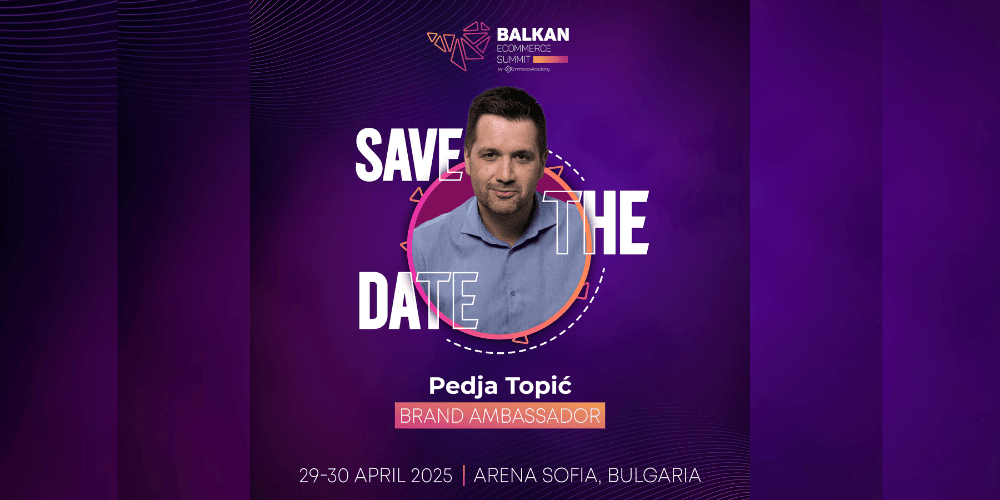
 Pedja Topic is not just a strategist – he is a driving force behind business success in Southeast Europe. With over 15 years of experience spanning industries like FMCG, retail real estate, innovation, AI SaaS, and digital consulting, Pedja has built his name as a leader who connects strategy, technology, and human insight to achieve sustainable growth.
His career began at British American Tobacco, but his entrepreneurial spirit led him to found Pokretach – a company that guides businesses toward future-proof growth through customer-first strategies and data-driven decisions.
Pedja’s approach goes beyond traditional business models. He believes every transaction is powered by human emotion, and every business can scale by understanding the people behind the numbers.
As a brand ambassador for the Balkan eCommerce Summit 2025, Pedja Topic supports the growth of the digital ecosystem in the region by promoting partnership and sustainable success in eCommerce. His focus on blending technology, customer experience, and strategic vision helps businesses unlock new opportunities for growth.
What role do you think events like Balkan eCommerce Summit 2025 play for the growth of the eCommerce community? What motivated you to take the role of brand ambassador?
Events like the Balkan eCommerce Summit 2025 serve as catalysts for growth by connecting key players in the industry – merchants, technology providers, logistics partners, and marketers. In a fragmented and evolving market like the Balkans, collaboration and shared knowledge are critical. These events provide insights into best practices, emerging trends, and success stories, helping businesses navigate challenges like cross-border logistics, digital payment adoption, and customer retention. Although it is a really big event with a couple of thousand participants, you have a very personalized feeling due to high-quality networking happening all the time.
As for the brand ambassadorship, my motivation comes from my deep belief in the potential of the Balkan eCommerce market and my passion for customer-driven business growth. Through Pokretach, I’ve worked with companies across different industries, helping them align their growth strategies with real customer needs. Becoming a brand ambassador for the Summit is a natural extension of that work. Additionally, I am impressed with the work that the entire Balkan eCommerce Summit team is doing, so I really wanted to support that and promote it within the Serbian eCommerce community.
In your journey from British American Tobacco to founding Pokretach, what key lessons have you learned about aligning business growth with customer needs? What do customers want the most?
The biggest lesson is that providing value to your customers is the most sustainable and healthiest source of growth. It comes from truly understanding what drives customer decisions and delight – not just what they say but what they actually do. Another super important thing that businesses must have in mind is: “You are not your customer”.
My most frequent answer to what customers want the most is: “It depends” ☺ It is cliché, yes, but it is also true. It depends on the market, industry, maturity of the business etc. But some of the most common things that can be outlined are:
- Price related factors – The Balkan markets are fairly price-sensitive, so these factors are always among the most important ones. Not only the price itself, but its communication, discounts etc.
- Convenience – Seamless shopping experiences, fast fulfillment, and easy returns.
- Appreciation – The customer wants to be acknowledged by the brand/company beyond the transaction. Clear and transparent information, honest and trustworthy reviews, reliable delivery, personalized offers – these are some of the things that make the customer valued by the business.
Businesses that consistently deliver on these expectations outperform their competitors.
Given your experience with Pokretach, what unique opportunities do you see for small and medium-sized enterprises (SMEs) in the Balkan eCommerce ecosystem?
The Balkan eCommerce market is still developing, which means SMEs have a unique opportunity to carve out strong positions before larger global players dominate the space.
Some key opportunities include:
- Leveraging New Tech for Efficiency & Customer Focus – SMEs now have access to powerful yet affordable tools for automation, AI-driven customer support, and data analytics. Implementing these tools can streamline operations – such as automating order management, improving logistics, or personalizing customer interactions – freeing up time and resources to focus on customers. However, adopting new technology is often a challenge. Many SMEs face barriers such as a lack of digital skills, resistance to change, or high upfront costs. Overcoming these challenges requires patience, education, the right partnerships, and phased implementation to ensure the technology actually enhances – not complicates – the business.
- Social & Community Engagement – The Balkans have high social media engagement. SMEs that leverage platforms like Instagram, TikTok, WhatsApp, Viber for direct sales and customer interaction can outperform traditional eCommerce strategies.
- Subscription & Loyalty Models – Many customers in the region are price-sensitive but value reliability. Subscription-based services and loyalty programs can drive repeat purchases and long-term engagement.
The key for SMEs is to focus on their unique strengths – personalized service, agility, and deep local market knowledge.
Eastern European eCommerce market is growing rapidly. What trends do you see most important to catch in the region’s eCommerce landscape in the next five years?
In my opinion, three key trends stand out:
- Cross-Border eCommerce Expansion – The Balkan market is still fragmented, but businesses are increasingly looking beyond their home countries. This expansion has two main dimensions:
- Regional Growth Within the Balkans – Selling across neighboring countries requires businesses to navigate regulatory differences, logistics, and payments, making it essential to develop scalable operations that account for local specifics.
- Going International – Expanding beyond the Balkans into the EU and global markets requires stronger branding, targeted marketing, and an understanding of international consumer behavior. SMEs that invest in cross-border logistics, multilingual support, and global payment solutions will have a competitive advantage.
- Marketplace Development – While global marketplaces like Temu and Shein are increasingly penetrating the markets, there’s a growing demand for local alternatives. This includes both:
- General Marketplaces that cater to broad audiences, competing with international giants by offering localized support and tailored services.
- Industry-Specific Marketplaces that serve niche segments like handmade goods, fashion, or agricultural products. These specialized platforms can offer more curated experiences, better pricing structures for sellers, and stronger customer loyalty.
- AI-Driven Shopping Experiences – I would bet on AI-powered shopping assistants to transform the way consumers interact with eCommerce platforms. These virtual assistants will help customers make better and more personalized buying decisions by understanding their preferences, comparing products, and offering tailored recommendations. As AI technology advances, these assistants will provide a seamless and more intuitive shopping experience, increasing both conversion rates and customer satisfaction. Businesses that integrate AI assistants effectively will gain a strong competitive edge in customer engagement and retention.
What role does leadership play in driving a company’s transition to being more customer-focused and innovative? Can you share an example from your career?
Leadership is everything when it comes to customer focus and innovation. It starts with mindset – if leadership prioritizes short-term gains over long-term customer relationships, the company will struggle to build loyalty.
Every example that started with the CEO and C-level wanting to create a customer-centric strategy, and following up on that with a clear roadmap of concrete activities focused on the customer is a great example. This kind of approach enables the culture to shift in the direction of the customer and secures long-term gains.
Looking back 10 years, if you were the one reading this interview, what three pieces of advice would you give yourself to achieve success in business – particularly in the ever-evolving world of online commerce?
- Customer delight is your best growth strategy – Every major business decision should start with understanding what truly matters to your customers. Data can tell you trends, but conversations and real behavior tell you the truth.
- Agility beats perfection – The online market moves fast. Don’t wait for the perfect strategy – test, iterate, and adapt. The companies that win are the ones that learn the fastest.
- Community is the real competitive advantage – Whether you’re building an eCommerce brand, a platform, or a consultancy, the strength of your community (customers, partners, advocates) is what sustains long-term growth.
Pedja Topic’s journey from global corporate roles to founding Pokretach is a testament to the power of customer-first thinking in eCommerce growth. His insights remind us that understanding human behavior, embracing technology, and fostering leadership-driven innovation are the pillars of sustainable success.
📅 Don’t miss the chance to learn from visionaries like Pedja Topic at Balkan eCommerce Summit 2025. Secure your ticket now and position your business for future growth. Visit balkanecommerce.com for more details!